Factors to Consider When Screening for Prostate Cancer
The symptoms worth mentioning to a doctor, and the risk factors (age, family history, race and weight) that should move screening up your list.
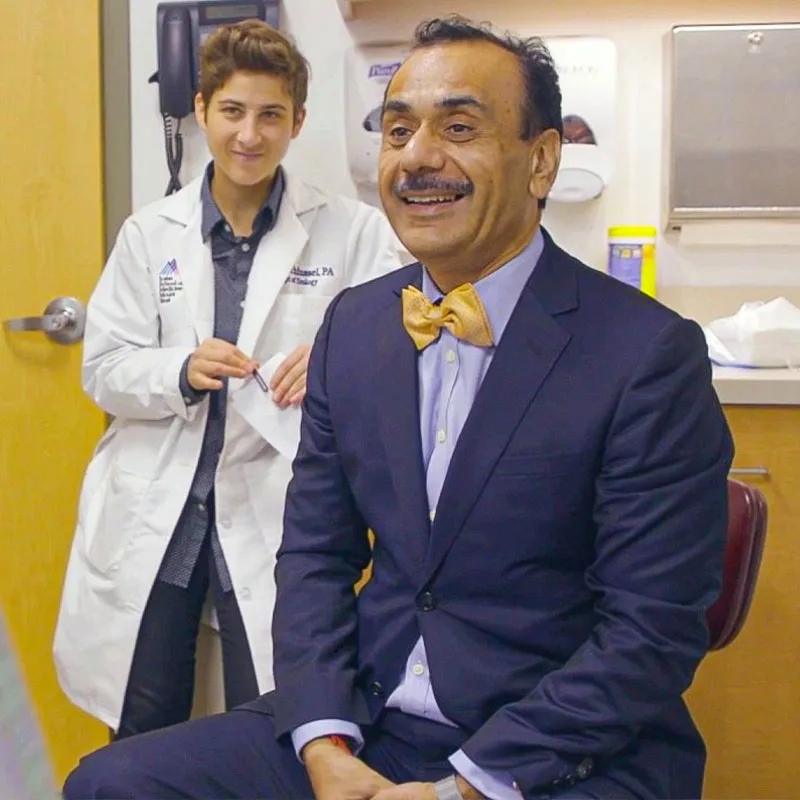
In the interest of normalizing the conversation around prostate health, here is what is worth knowing.
Common symptoms
- Needing to urinate more often than usual, most commonly at night
- Having to rush to the toilet
- Finding it difficult to start urinating
- Taking longer to urinate
- A weak urine flow or stream
- A feeling that your bladder is not completely empty
- Blood in your urine
- Finding blood in your semen
It is common for men’s prostates to enlarge as they get older due to non-cancerous conditions, something doctors refer to as benign prostate enlargement. A symptom on this list is a reason to ask a question, not a reason to panic.
Additional warning signs include back pain, testicle pain, appetite loss, unintentional weight loss and bone pain in other areas, which can potentially indicate the cancer has spread.
Risk factors for prostate cancer
Older age. Risk increases significantly after age 50, though younger men can develop it.
Family history. Screening is recommended for men with blood relatives diagnosed with prostate cancer. Genetic factors like BRCA1 and BRCA2 mutations, plus a family history of breast cancer, may elevate risk.
Race. Research shows Black men face elevated prostate cancer risk with more aggressive presentations, though the underlying cause remains unclear. It is one of the main reasons our screening work goes directly into the communities most affected.
Obesity. People who are overweight show higher prostate cancer risk, with more aggressive recurrence patterns.
What to do with this
None of this is a diagnosis, and none of it is a reason to lose sleep. It is a reason to know your number. A PSA test is a blood draw. It takes about five minutes.
If you want to talk it through with men who have been there, our virtual support groups meet three times a month and are open to anyone.